Optician Salary, Job Outlook & Career Earning Potential 2025
What opticians actually earn, how fast the career is growing, and what determines your earning potential.
The Bottom Line
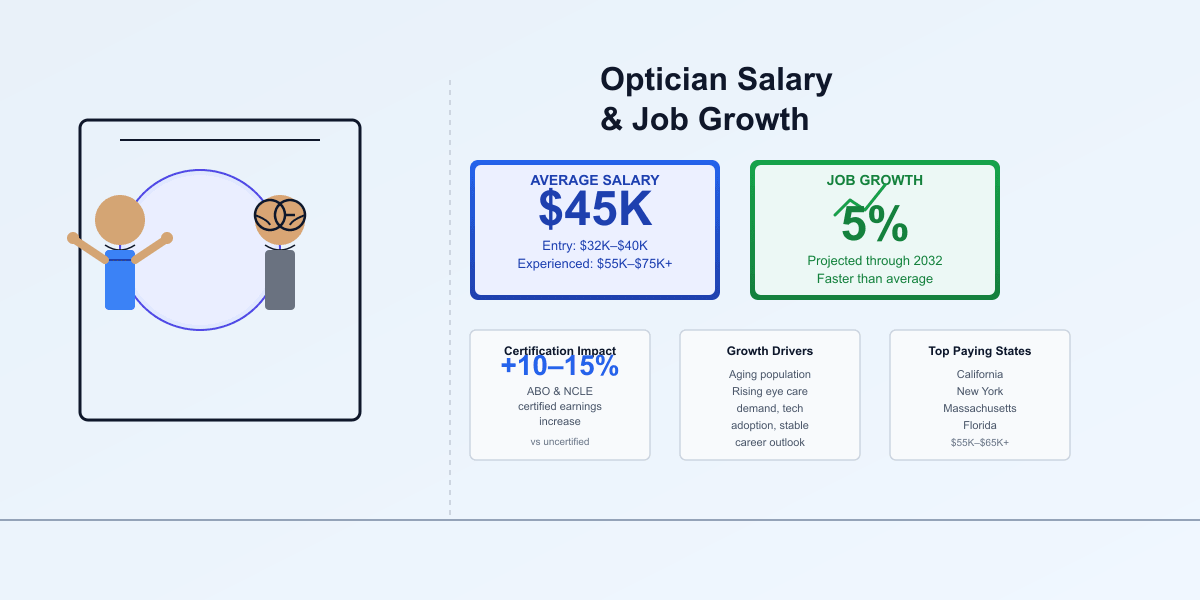
Opticians earn an average of $45,000 per year, with experienced professionals earning $55,000-$75,000+. The career is growing faster than average (5% projected growth through 2032), driven by an aging population and rising demand for eye care. It's a stable, in-demand profession with solid earning potential and good work-life balance.
Optician Salary Overview
Per year (BLS data)
Entry to senior level
Through 2032 (faster than avg)
These figures come from the U.S. Bureau of Labor Statistics and represent the median and range for optical professionals. Your actual salary will depend on several factors covered below.
Salary by Experience Level
Entry-Level Optician (0–2 years)
$32,000–$40,000New opticians typically start in training roles at retail optical chains or independent shops. Salary reflects learning phase and lower productivity. Focus is on building core skills.
Mid-Level Optician (3–7 years)
$40,000–$52,000Experienced opticians with solid technical skills and patient rapport earn significantly more. Many have completed ABO and NCLE certifications by this stage, increasing their value.
Senior/Supervisor (8+ years)
$55,000–$75,000+Senior opticians, lab managers, and supervisors earn top-tier salaries. May oversee other staff, handle complex cases, or work in high-end practices. Specialized skills command premium pay.
Note: These ranges are based on national averages. Individual salaries can vary significantly based on location, employer type, and certifications.
Salary by Geographic Location
Where you work dramatically affects your earning potential. Metropolitan areas and wealthy states consistently offer higher salaries.
Highest-Paying States
California ($60K+), New York ($58K+), Massachusetts ($56K+), Connecticut ($55K+), New Jersey ($54K+)
High-Paying Metro Areas
San Francisco Bay Area, Los Angeles, New York City, Boston, Miami, Washington DC—typically 15–25% above national average
Rural & Lower-Cost Areas
Small towns and rural regions typically pay 15–25% below national average ($32K–$38K), reflecting lower cost of living and demand
Why Location Matters
- • Cost of living: Higher COL areas pay proportionally more
- • Population density: More patients = more demand for optical services
- • Competition: Wealthy areas support premium optical practices with higher pay
- • Insurance reimbursement: Varies by state and affects practice revenue
Salary by Employer Type
Who you work for significantly impacts your earning potential. Different practice settings offer different compensation structures.
Retail Optical Chains (LensCrafters, Pearle Vision, etc.)
Stable hourly pay or commission-based. Benefits typically include health insurance, 401(k), and employee discounts. Growth to assistant manager/manager roles available.
Independent Optical Practices
Often higher pay, but variable. May include commission, bonus, or profit-sharing in established practices. More direct relationship with owner. Benefits vary by practice size.
Ophthalmology/Optometry Offices
Steady pay with professional environment. Better benefits in larger practices. Less focus on sales, more on clinical support. Good work-life balance.
Optical Laboratories
Technical focus rather than customer-facing work. Salary depends on position (surfacing tech, QC inspector, lab manager). Stable hours, less weekend/evening work.
Specialty/High-End Practices
Luxury eyewear boutiques, designer practices, or high-net-worth clientele markets. Premium pay for specialized knowledge (luxury frames, advanced lens designs, high-end fitting).
Impact of Certifications on Salary
ABO and NCLE certifications significantly boost earning potential. Employers strongly prefer—or require—certified opticians.
Uncertified Optician
Limited advancement. May not qualify for senior roles. Some employers won't hire without certification.
ABO Certified
10–15% higher pay. Opens many more job opportunities. Expected industry standard.
NCLE Certified
Specialist credential. Higher pay for contact lens expertise. Expands career options.
Dual Certified (ABO + NCLE)
Most valuable. Maximum job flexibility. Best promotion and advancement prospects.
Bottom line: ABO-NCLE dual certification is one of the best investments you can make in your optician career. The 10–20% salary premium typically pays back the certification costs within 6–12 months.
Job Outlook & Growth Projections
Bureau of Labor Statistics Projection
Through 2032 (vs. 3% average across all occupations)
An estimated 33,400 new optician positions expected to open over the next 10 years. Faster growth than average reflects persistent, strong demand.
What's Driving Growth?
Aging Population
Americans aged 65+ are the fastest-growing demographic. Vision problems increase with age; this population drives demand for eyeglasses and contact lenses.
Increasing Eye Care Awareness
More people recognize the importance of regular eye exams and quality eyewear. Lifestyle changes (screen time, digital eye strain) create new demand.
Expansion of Optical Retail
More optical chains opening, retail optical growth, and online eyewear companies needing local fitting/support creates new positions.
Advanced Technology
Specialty contact lenses (multifocal, scleral, therapeutic) and high-end lens technologies create need for skilled, knowledgeable opticians.
Career Security
Opticianry is considered a stable, recession-resistant career. People always need eyewear and vision care, even during economic downturns. Job security is excellent.
Other Factors Affecting Salary
Commission & Bonus Structure
Retail positions often include commission (% of sales) or performance bonuses. High performers can earn significantly more. Some independent practices offer profit-sharing.
Specializations
Expertise in therapeutic contact lenses, low-vision aids, pediatric fitting, or luxury frame knowledge commands premium pay. These skills take years to develop but increase earning potential significantly.
Management Roles
Advancement to assistant manager, manager, or supervisor typically adds $5,000–$15,000+ annually. Leadership roles are key to reaching top-tier optician salaries.
Benefits & Total Compensation
Consider full benefits: health insurance, 401(k) matching, PTO, continuing education funds, and employee discounts on eyewear. Total compensation can be 10–15% higher than base salary.
Self-Employment/Ownership
Some opticians open independent practices. Income varies widely (can exceed $70,000+) but includes business risk, overhead, and irregular early-years income. Requires additional business training and capital.
How to Maximize Your Optician Earning Potential
Get Certified (ABO & NCLE)
Non-negotiable for maximum earning potential. Dual certification is the industry standard and opens the most opportunities.
Gain Experience in High-Demand Markets
Work in growing metro areas (California, NYC, Florida, Texas). Build skills, then consider relocating for better-paying positions.
Develop Specializations
Invest in additional training: specialty contact lenses, low-vision services, pediatric fitting, luxury frame expertise. Specialists earn 15–25% more.
Seek Management Opportunities
Assistant manager and manager roles significantly increase pay. Demonstrate leadership, training ability, and sales performance to advance.
Choose Employer Type Strategically
Independent practices often pay more. Consider high-end optical boutiques if you want premium pay. Retail chains offer stability.
Continuous Learning
Pursue ongoing CE credits, workshops, and certifications. Stay current with lens technology, fitting techniques, and industry trends.
Ready to Launch Your Optician Career?
Understand what you need to earn more and grow faster. Our ABO & NCLE prep course guides you through certification—your first step to higher salary and better job opportunities.
Start Free ChapterFrequently Asked Questions
What is the average optician salary in 2025?
The average optician salary is approximately $45,000 per year according to Bureau of Labor Statistics data. Entry-level opticians earn $32,000-$40,000, while experienced opticians with 8+ years earn $55,000-$75,000+. Salary varies significantly by location, employer type, and certifications.
Is the job outlook good for opticians?
Yes, the job outlook for opticians is excellent. The Bureau of Labor Statistics projects 5% job growth through 2032, which is faster than average. This growth is driven by an aging population with increased vision correction needs and rising demand for eye care services.
Which states pay opticians the most?
States with the highest optician salaries include California, New York, Massachusetts, and Florida, where salaries average $55,000-$65,000+. The difference is primarily due to higher cost of living and greater demand for optical services in these states.
Can opticians earn more with certification?
Yes, significantly. ABO and NCLE certified opticians earn approximately 10-15% more on average than uncertified opticians. Dual certification (ABO and NCLE) is especially valuable and can increase earning potential and job opportunities substantially.
What factors affect an optician's salary?
Key factors include: years of experience, geographic location, type of employer (independent shop vs. chain), certifications (ABO/NCLE), whether they manage staff, additional specializations (therapeutic contact lenses, low vision), and employer profitability. Rural areas typically pay less than urban centers.